
One in Six Older Indians May Be Living With a Spinal Fracture, and Most Will Never Be Told

On World Osteoporosis Day, October 20, 2026, Dr. Mohana Rao Patibandla highlights the importance of recognising vertebral compression fractures, persistent back pain and height loss in older adults.
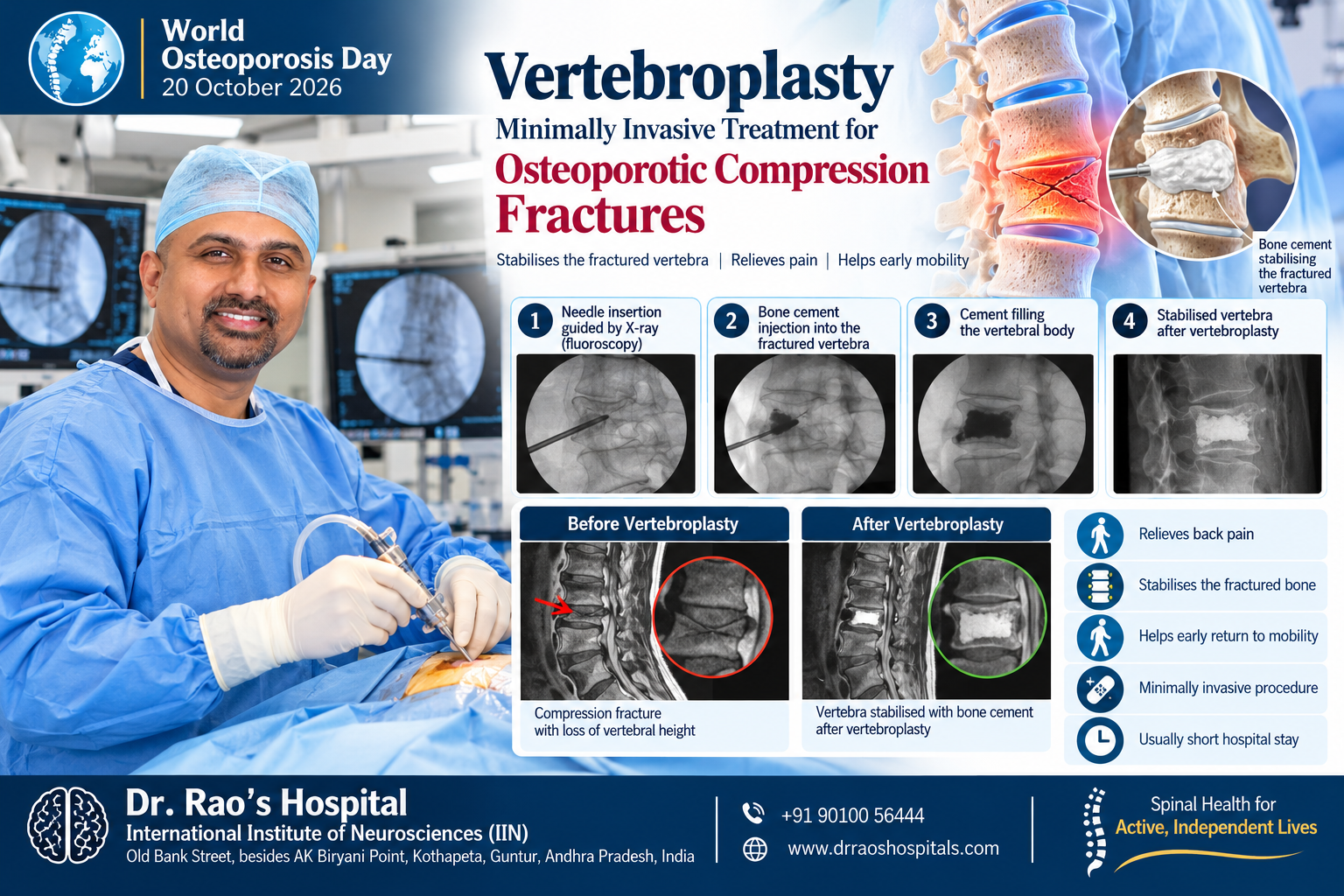
World Osteoporosis Day 2026: Dr. Mohana Rao Patibandla explains vertebroplasty, a minimally invasive procedure that uses bone cement to stabilise selected osteoporotic vertebral compression fractures.
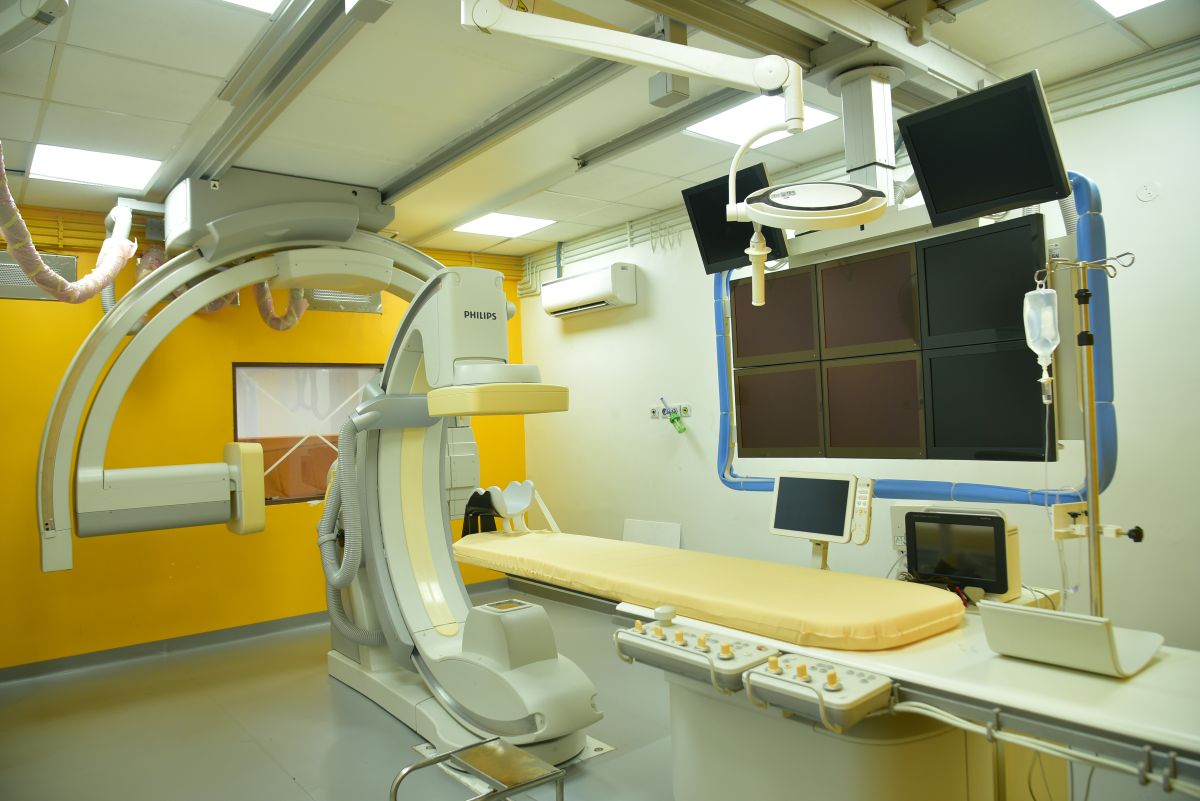
The advanced biplane cath lab at Dr. Rao's Hospital, designed for precision neurovascular procedures and minimally invasive surgeries, first in Andhra Pradesh and Telangana in India.
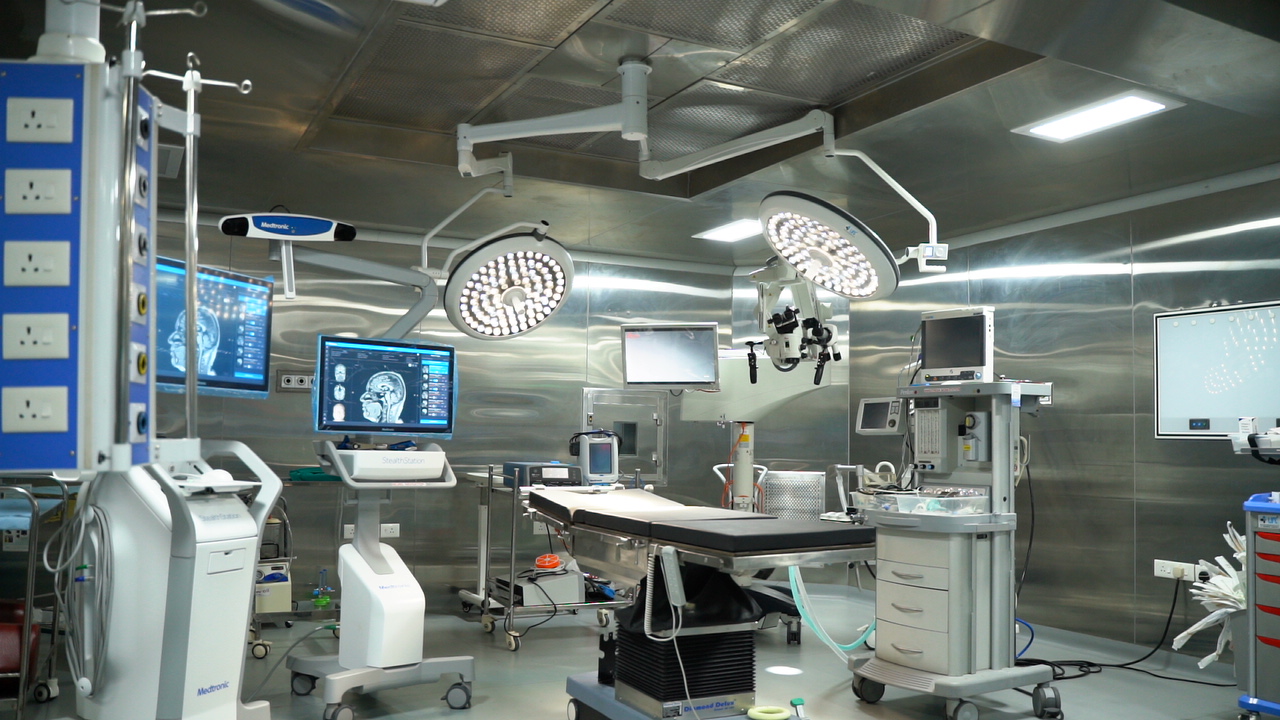
The high-tech neurosurgery operating room at Dr. Rao's Hospital, Guntur featuring advanced imaging and navigation systems for precise brain and spine surgeries.

Dr Rao the best stereotactic radiosurgeon in India, Guntur
On World Osteoporosis Day, Guntur neurosurgeon Dr. Mohana Rao Patibandla says the spine is where osteoporosis shows up first, and where it is missed most often
On World Osteoporosis Day, Guntur neurosurgeon Dr. Mohana Rao Patibandla says the spine is where osteoporosis shows up first, and where it is missed most often
Osteoporosis is usually pictured as a broken hip. The data suggest the first fracture is far more often in the spine, and most people never learn it happened.
On World Osteoporosis Day, Dr. Mohana Rao Patibandla, Chief Neurosurgeon at Dr. Rao’s Hospital – International Institute of Neurosciences (IIN), Guntur, is calling for spinal health to move to the centre of India’s bone-health conversation. Dr. Rao is a minimally invasive neurosurgeon, pediatric neurosurgeon, cerebrovascular endovascular neurosurgeon, skull base neurosurgeon, neuro-oncology specialist and stereotactic radiosurgeon.
The numbers behind the silent fracture
1 in 6. The Delhi Vertebral Osteoporosis Study found vertebral fractures in 17.9% of 808 residents aged over 50, a rate comparable to Caucasian populations. Indian adults are not protected by a “different” bone biology.
2 in 3 go unnoticed. Roughly two-thirds of spinal fractures worldwide are estimated to go undiagnosed. Applied to the Delhi figure, this implies roughly one in eight older adults could be living with a spinal fracture nobody has identified. This is an illustrative extrapolation, not a measured Indian figure.
The spine gives way before the hip. In a study of rural postmenopausal women from Tirupattur in southern India, osteoporosis at the spine was found in 45%, against 32.6% at the femoral neck. A hip-only focus would miss many of them.
A “borderline” scan can mislead. In Delhi women over 50, 35.7% had osteoporosis by bone density. Counting those with spinal fractures raised the number needing treatment to 46.5%, and bone density was not lower in women with fractures than in those without. A scan that is not alarming does not rule out a collapsed vertebra.
Men are not spared. The Delhi study found fracture prevalence of 18.8% in men and 17.1% in women. It rose with age in women, from 14.7% at 50-59 to 22.4% at 70 and above, but not in men.
One fracture invites the next. Having a vertebral fracture is linked to a fivefold increase in the risk of another.
A fracture can follow a recent break elsewhere. In one study of patients admitted with a recent non-spine fracture, 51% had a previously undiagnosed vertebral fracture, even when bone density was normal.
The wider burden. An estimated 50 million people in India had low bone density by 2013. Widespread vitamin D deficiency across all ages adds to the risk.
“The body keeps a quiet record in the spine”
“A hip fracture announces itself. A spinal fracture often does not,” said Dr. Rao. “Patients tell us, ‘I have had back pain for months,’ or ‘I have become shorter,’ and it is dismissed as ageing or arthritis. In reality, a vertebra may have collapsed. Many fractures happen during ordinary life. Even coughing or stepping out of a bathtub can be enough in advanced osteoporosis.”
Warning signs worth acting on
Sudden or new back pain, especially in someone over 50
Loss of height
A stooped or rounded upper back
Pain that eases when lying down
A fracture at any site after a minor fall
Diagnosis
Dr. Rao advises that anyone over 50 with these signs, or younger people with risk factors, should ask for a bone density (DEXA) scan together with imaging of the spine. Vertebral fracture assessment, an X-ray or an MRI can reveal collapsed vertebrae that density numbers alone do not. Risk factors include early menopause, long-term steroid use, diabetes, thyroid disorders, smoking, alcohol, low body weight, family history and vitamin D deficiency.
Prevention at every age
Bone strength is built early and protected for life. Dr. Rao recommends:
Adequate calcium, protein and vitamin D, through diet and sensible sun exposure, with supplements guided by blood tests
Regular weight-bearing and resistance exercise, such as brisk walking, stair climbing and strength training
No smoking and minimal alcohol
Fall-proofing the home: good lighting, non-slip bathroom floors and clear walkways
Timely screening after menopause, and for men over 50 with risk factors
Treatment
“Osteoporosis is treatable, and a fracture is the strongest reason to start,” said Dr. Rao. “Medicines can strengthen bone and cut the risk of the next fracture. Most spinal fractures heal with pain control, bracing and rehabilitation. When a collapsed vertebra causes deformity, relentless pain or pressure on the spinal cord or nerves, minimally invasive surgical options may be considered, with the aim of faster recovery and less tissue disturbance.”
A call to action
Dr. Rao urged families to treat persistent back pain in older relatives as a signal rather than a nuisance. He also asked doctors to look at the spine on any scan, and to refer patients with a fracture for osteoporosis assessment and treatment. “We should not wait for a hip fracture to learn that the bones were failing,” he said.
About Dr. Mohana Rao Patibandla
Dr. Mohana Rao Patibandla is the founder and Chief Neurosurgeon of Dr. Rao’s Hospital – International Institute of Neurosciences (IIN), Guntur. He has performed 12,000 minimally invasive surgeries, 4,000 of them in Guntur.
About Dr. Rao’s Hospital – International Institute of Neurosciences (IIN)
Dr. Rao’s IIN brings world-class neurosurgical care to a non-metropolitan setting, with intraoperative neurophysiological monitoring, functional brain mapping, neuronavigation, a biplane catheterisation laboratory, a hybrid operation theatre and intraoperative CT. It draws patients from other Indian states and abroad, with about 10% from overseas, and has been featured in Forbes India. Address: Old Bank Street, besides AK Biryani Point, Kothapeta, Guntur, Andhra Pradesh.
Media Contact
Dr. Rao’s Hospital – International Institute of Neurosciences (IIN)
Email: info@drraoshospitals.com
Phone: +91 90100 56444
This release is for awareness and does not replace individual medical advice.
Sources: Delhi Vertebral Osteoporosis Study (DeVOS)
· BMD and vertebral fractures in Indian women · Vellore/Tirupattur FRAX study · Royal Osteoporosis Society · Dubai vertebral fracture study (PMC)
· Geusens et al., undiagnosed fractures · IOF India audit 2013 (PMC) · Vertebral compression fractures review (PMC)
Mohana Rao Patibandla
Patibandla Narayana Swamy Neurosciences LLP
+ +91 90100 56444
info@drraoshospitals.com
Visit us on social media:
LinkedIn
Instagram
Facebook
YouTube
X
Dr. Rao's Hosptial - the best neurosurgery hospital in India - with medical tourism
Legal Disclaimer:
EIN Presswire provides this news content "as is" without warranty of any kind. We do not accept any responsibility or liability for the accuracy, content, images, videos, licenses, completeness, legality, or reliability of the information contained in this article. If you have any complaints or copyright issues related to this article, kindly contact the author above.
